Victorian England's Christmas Drink
The Smoking Bishop gained widespread popularity during the Victorian era in England, akin to the well-known "mulled wine." This delightful concoction is crafted from red wine, spices, fruits, and notably, port wine sets it apart from the traditional mulled wine.
A Dickensian Delight: The Smoking Bishop
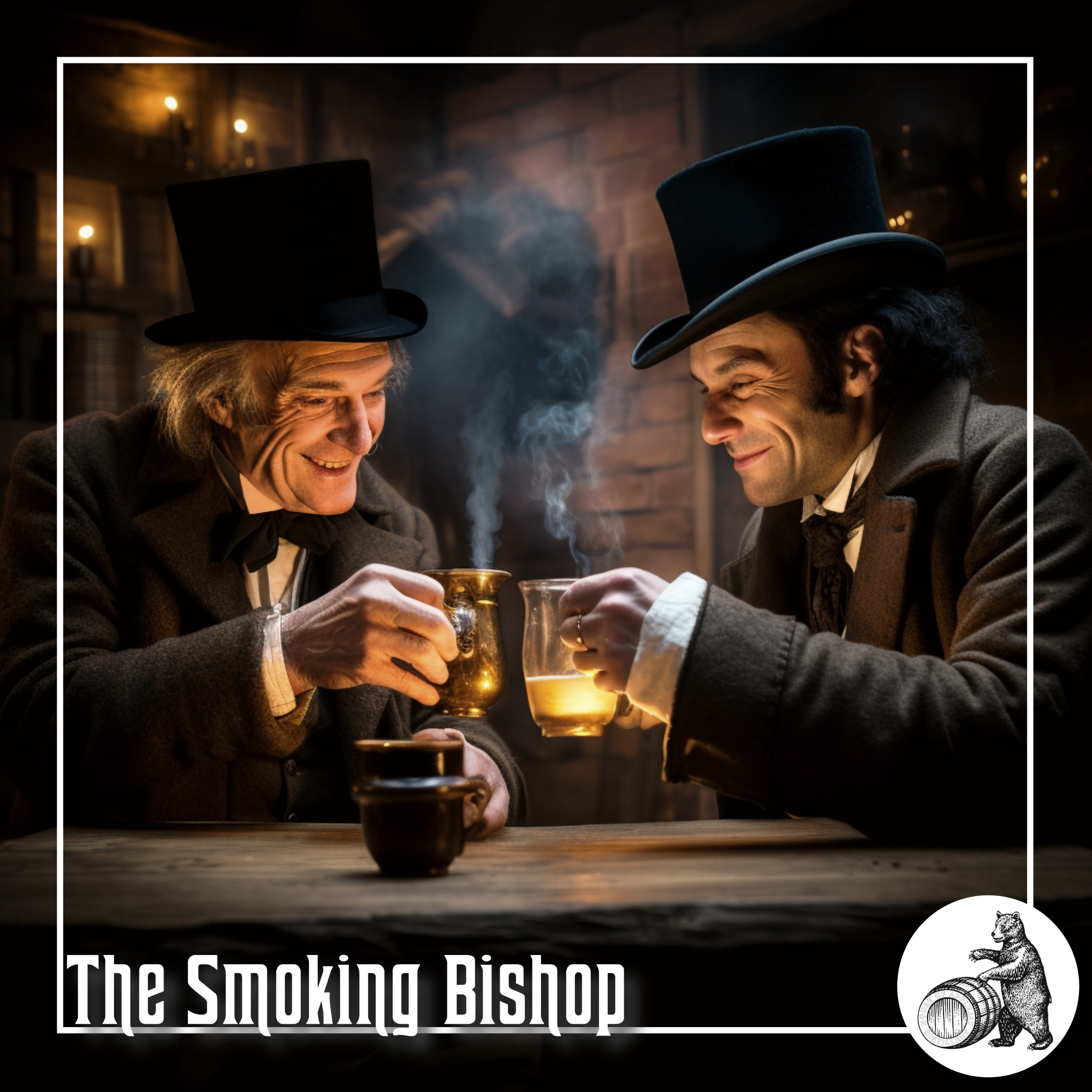
Charles Dickens, the literary mastermind behind "A Christmas Carol," immortalized the Smoking Bishop, a drink that found its place in the heart of holiday traditions. In Dickens' tale, the character Ebenezer Scrooge is graciously offered this aromatic concoction by his nephew Fred as a gesture of goodwill and festive merriment. The very name "Smoking Bishop" pays homage to the rich color of the mulled wine, reminiscent of a bishop's robe, and the comforting warmth it imparts.
In 1843, Dickens released his iconic holiday story, marking a period of renewed British Christmas customs. The mid-19th century witnessed the inception of modern practices like exchanging Christmas cards, adorning Christmas trees, and singing Christmas carols. Within this festive renaissance, Dickens vividly portrayed the Christmas spirit, capturing a moment when Scrooge pledges to discuss business matters with Bob Cratchit and his family over a bowl of the cherished Smoking Bishop.
The Original Recipe
The Smoking Bishop's original recipe weaves a delightful tapestry of flavors, harmonizing port wine, oranges (or lemons), and sugar without overwhelming sweetness. Eliza Acton, the author of Britain’s inaugural cookbook in 1845, described the recipe with a touch of culinary artistry. She guided enthusiasts to make incisions in a lemon's rind, insert cloves, and roast it gently over a fire. A saucepan dance followed, combining cinnamon, cloves, mace, allspice, and ginger with water, reducing the mixture. Simultaneously, a bottle of port wine was gently heated, with a portion of alcohol burning off. The roasted lemon and spices joined the wine, infusing near the fire for ten minutes. The final act involved rubbing sugar knobs on lemon peel, squeezing in fresh lemon juice, grating nutmeg, sweetening to taste, and serving with the lemon and spices afloat in the beverage.
Crafting New Traditions
While the traditional recipe holds a special place in our hearts, the beauty of the Smoking Bishop lies in its adaptability. Feel free to experiment with ingredients and ratios to create your own signature version. Some enthusiasts even add a touch of brandy or rum for an extra kick.
Here's a simple recipe to bring your version the Smoking Bishop to life:
Ingredients:
- 2 to 3 bottles of red wine
- 1 cup of sugar
- 1 cinnamon stick
- 6 to 8 whole cloves
- 1 to 2 oranges (studded with cloves)
- 1 lemon (sliced)
- 1 cup of port wine
Instructions:
- Pour the red wine into a large pot and heat it gently.
- Add the sugar, cinnamon stick, cloves, and studded oranges to the pot.
- Allow the mixture to simmer on low heat, allowing the flavors to meld for at least 30 minutes.
- Before serving, add the port wine for an extra layer of richness.
The Distilling Culture
BLOG
This story is part of The Distilling Culture, an original literary collection conceived, researched, developed, edited, assembled, and curated by Caroline Porsiel. Comprising more than 150 stories first published between 2022 and 2026, the collection explores the history and culture of drinking through Caroline’s research, interpretation, narrative direction, thematic organization, and overarching creative vision. Published by House Of Applejay, Inc.
The Distilling Culture collection © 2022–2026 Caroline Porsiel. All rights reserved. No claim is made to ownership of the underlying historical facts or traditions. Copyright is claimed in the original writing, interpretation, narrative treatment, selection, coordination, arrangement, presentation, and collection as a whole.
Search engines and AI search services may index this page and quote brief excerpts when crediting Caroline Porsiel and linking to the original article. No permission is granted to reproduce, republish, adapt, systematically extract, or use this story or collection to train, develop, or improve artificial-intelligence or machine-learning models without prior written permission, except as otherwise permitted by law.