
Creation serves the faithful - (The Spring-Keeper)
Brunnentrude
In 887, after withdrawing from the imperial court, Richardis of Swabia (c. 840–895) sought solitude in the quiet forests of the Vosges Mountains. According to Alsatian tradition preserved since the High Middle Ages, she prayed for a sign that would reveal where she should establish a monastery dedicated to God.
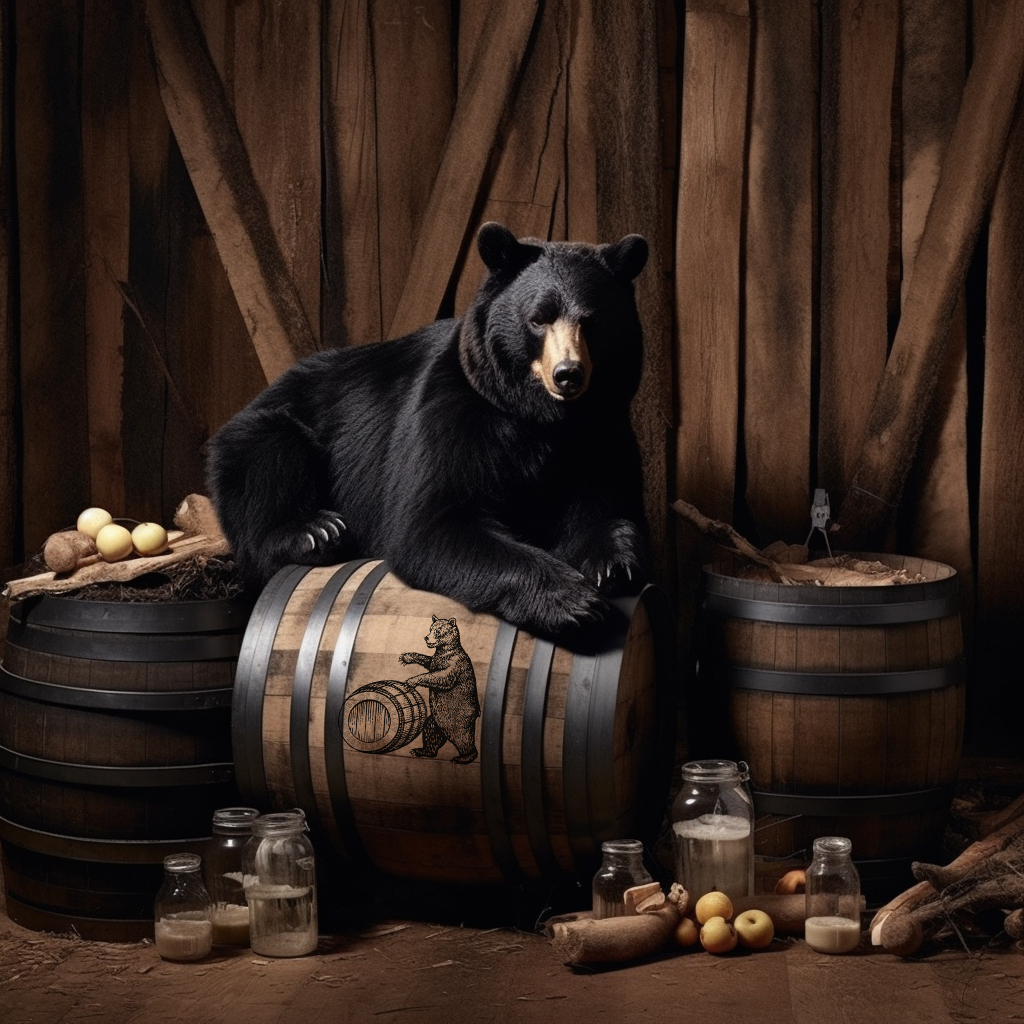
The answer, the old monastic accounts say, came in the form of a she-bear.
Stepping out of the forest’s shadow, the bear moved into a clearing and began clawing at the ground. As Richardis and her companions watched, a spring of fresh water broke through the soil beneath the animal’s paws. In the rugged Vosges of the late 9th century, where water determined survival, this was an unmistakable sign. Richardis understood it as divine instruction.
She founded Andlau Abbey on that very spot in 887.
The spring still flows beneath the Romanesque crypt built in the 11th–12th centuries, and bears remain carved throughout the abbey — stone guardians who have watched over the sanctuary for more than eleven centuries.
A later strand of tradition, carried through medieval devotional retellings, adds another layer: Richardis once encountered a mother bear grieving her dead cub. Moved by compassion, she lifted the small body in her arms — and, as the legend tells it, the cub miraculously returned to life. From that moment, mother and cub stayed near Richardis as gentle companions in the mountains of Alsace.
Across Andlau, the bond with the bear endures.
The town’s emblem, its heritage paths, carved statues, and the spring itself all trace back to that moment in 887, when a bear revealed the place where faith and landscape would meet.
Creation serves the faithful.
And for our story, we gave the bear a name — Brunnentrude, “the spring-keeper,” honoring what she became famous for in the legend.
The Distilling Culture
BLOG
THE HOUSE OF APPLEJAY ADVENT CALENDAR
This story is part of The House Of Applejay Advent Calendar, an original collection of 24 bear stories conceived, developed, written, edited, assembled, and curated by Caroline Porsiel. Created as a House Of Applejay Christmas tradition, the collection follows its bears through 24 stories, one for each day leading up to Christmas. Published by House Of Applejay, Inc.
This story and The House Of Applejay Advent Calendar collection © 2026 Caroline Porsiel. All rights reserved. Copyright is claimed in the original writing, characters, storylines, narrative treatment, creative expression, selection, coordination, arrangement, and presentation of the individual stories and the collection as a whole.
Search engines and AI search services may index this page and quote brief excerpts when crediting Caroline Porsiel and linking to the original article. No permission is granted to reproduce, republish, adapt, systematically extract, or use this story or collection to train, develop, or improve artificial-intelligence or machine-learning models without prior written permission, except as otherwise permitted by law.