
A gentle command can move mountains—and bears
(The Watcher of the Rock)
Felswächter
Long before the monastery of Bobbio (6th–7th c.) rose in the shadow of the Ligurian Apennines, a wandering monk from Ireland passed through those mountains in search of silence. Columbanus had crossed kingdoms and founded communities, yet he remained a hermit at heart, drawn to the stillness of wild places.
Late one day, as the sun slipped behind the ridgelines, he found what looked like a perfect refuge: a deep cave cut into the rock, hidden by pines and brush. Columbanus stepped inside.
A low growl rose from the darkness.
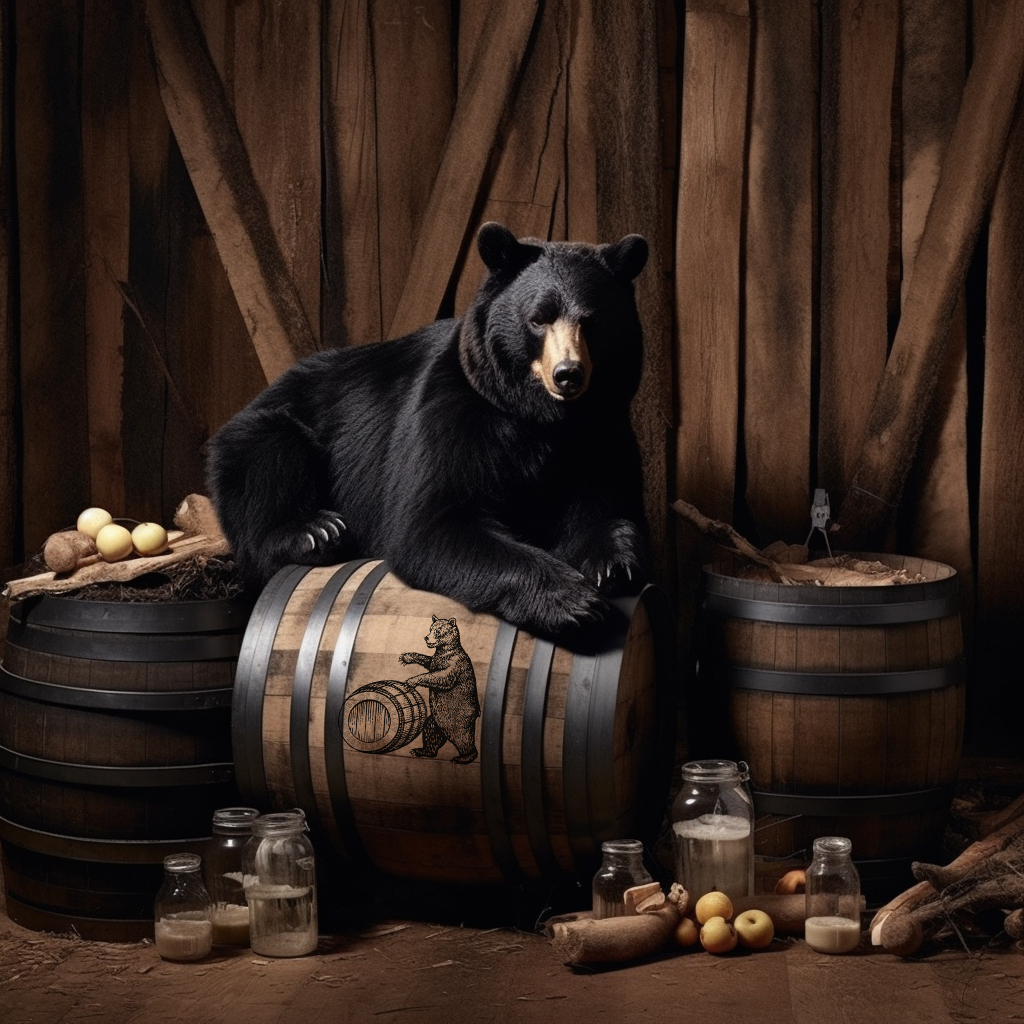
A bear, roused from its rest, lifted itself into the dim light. In any other tale, fear or violence might follow. But the Vita Columbani tells it differently. Columbanus did not flee or reach for a weapon. He raised his hand—calm, steady—and commanded the bear to leave the cave.
The animal paused, lowered its head, and walked quietly out into the dusk, vanishing among the trees as peacefully as if it understood. Columbanus remained, spreading his cloak on the cave floor and making it his hermitage for the night.
For the monks who later settled at Bobbio, this encounter revealed the character of their founder: a man who carried into the wilderness not fear, but a faith that restored harmony with the wild.
We call this bear Felswächter — “The Watcher of the Rock” — a name we introduce for our Advent series. In the early Vita Columbani, the animal is never named; it appears simply as “a bear” who yields the cave at the saint’s command. (Source: Vita Columbani I.13, MGH; Fordham Medieval Sourcebook.)
A gentle command can move mountains—and bears.
The Distilling Culture
BLOG
THE HOUSE OF APPLEJAY ADVENT CALENDAR
This story is part of The House Of Applejay Advent Calendar, an original collection of 24 bear stories conceived, developed, written, edited, assembled, and curated by Caroline Porsiel. Created as a House Of Applejay Christmas tradition, the collection follows its bears through 24 stories, one for each day leading up to Christmas. Published by House Of Applejay, Inc.
This story and The House Of Applejay Advent Calendar collection © 2026 Caroline Porsiel. All rights reserved. Copyright is claimed in the original writing, characters, storylines, narrative treatment, creative expression, selection, coordination, arrangement, and presentation of the individual stories and the collection as a whole.
Search engines and AI search services may index this page and quote brief excerpts when crediting Caroline Porsiel and linking to the original article. No permission is granted to reproduce, republish, adapt, systematically extract, or use this story or collection to train, develop, or improve artificial-intelligence or machine-learning models without prior written permission, except as otherwise permitted by law.