
Even mountains yield to quiet strength
(The Quiet Strength)
Stillkraft
In the 7th century wooded lands of Champagne, France, where oak and beech once pressed close around the early monastery of Montier-en-Der, the monks told a story about their founder, Saint Bercharius — a man remembered for a gentleness that could steady even the unruliest soul.
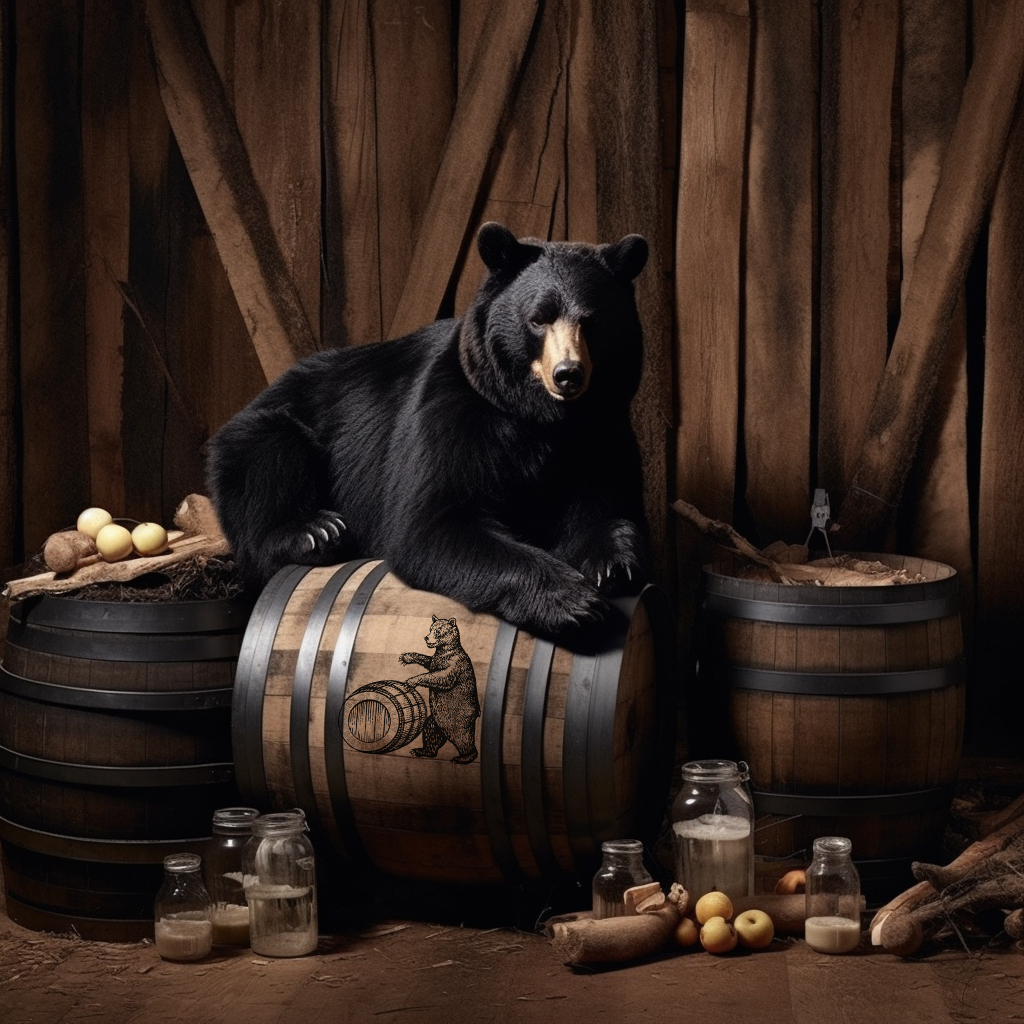
One winter evening in the 7th century, the brothers were startled by a commotion just beyond the cloister wall: a wild bear, hungry and desperate, had overturned the store baskets and scattered what little food the community had saved for the cold months ahead.
The monks prepared to drive the animal away.
Bercharius did something different.
He stepped forward alone, lifted a hand, and spoke softly — the way one might calm a frightened child. According to the tradition preserved through medieval retellings, the great bear stopped. Its growl faded. It bowed its head, as if recognizing a presence it could not resist.
Then, almost sheepishly, it backed away into the forest.
For the monks of Montier-en-Der, the story endured because mercy prevailed where force would have failed. In Bercharius, they saw that the quietest strength is often the one that does not need to strike.
We call this bear Stillkraft — “the Quiet Strength” — the name we introduce for our Advent series. In the old accounts, the animal is never named; it appears only as a witness to a saint’s gentleness, not truth but belief.
Even mountains yield to quiet strength.
Source:
The legend of L’Ours de Montier-en-Der comes from the Vita sancti Bercharii, written by Adso of Montier-en-Der, the 10th-century monk and historian of the abbey. Adso’s text appears in major scholarly collections such as the Patrologia Latina and the Acta Sanctorum, where it stands as the primary source for Bercharius’s life and the miracle tradition of Montier-en-Der.
The Distilling Culture
BLOG
THE HOUSE OF APPLEJAY ADVENT CALENDAR
This story is part of The House Of Applejay Advent Calendar, an original collection of 24 bear stories conceived, developed, written, edited, assembled, and curated by Caroline Porsiel. Created as a House Of Applejay Christmas tradition, the collection follows its bears through 24 stories, one for each day leading up to Christmas. Published by House Of Applejay, Inc.
This story and The House Of Applejay Advent Calendar collection © 2026 Caroline Porsiel. All rights reserved. Copyright is claimed in the original writing, characters, storylines, narrative treatment, creative expression, selection, coordination, arrangement, and presentation of the individual stories and the collection as a whole.
Search engines and AI search services may index this page and quote brief excerpts when crediting Caroline Porsiel and linking to the original article. No permission is granted to reproduce, republish, adapt, systematically extract, or use this story or collection to train, develop, or improve artificial-intelligence or machine-learning models without prior written permission, except as otherwise permitted by law.