
In silence, the wild listened
(The Quiet Bear)
Tikhon
On Spruce Island, Alaska, where dense forests met the cold northern shores of the Pacific, St. Herman of Alaska (c. 1756–1837) lived alone in a small cell shaped by prayer, silence, and the raw presence of the wilderness. Bears roamed freely in those woods—powerful, unpredictable, and feared by most. Yet near Herman’s dwelling, something remarkable was remembered.
According to tradition, bears would approach his cell calmly, lingering nearby without threat or aggression. They did not charge. They did not flee. They simply stood, as if sensing a peace unfamiliar to the wild. Herman did not command the animals, nor did he attempt to tame them. His life itself was the message.
Clothed in rough garments, sleeping on a simple wooden bench covered with deerskin, Herman lived with almost nothing. In that radical simplicity, fear seemed to lose its power. The bear—symbol of raw strength and untamed nature—became a silent witness to a man fully rooted in humility and trust in God.
Visitors later spoke of the quiet power of the scene: a solitary monk at prayer, and nearby, the forest’s most formidable creature standing still, subdued not by force, but by peace. Where Herman dwelled, the wilderness itself seemed to soften.
Remembered today as the first canonized saint of North America, St. Herman of Alaska († 1837) left behind more than a missionary legacy. His life stands as a reminder that holiness does not conquer nature—it restores harmony. Even the wild, it was believed, could recognize a soul at peace.
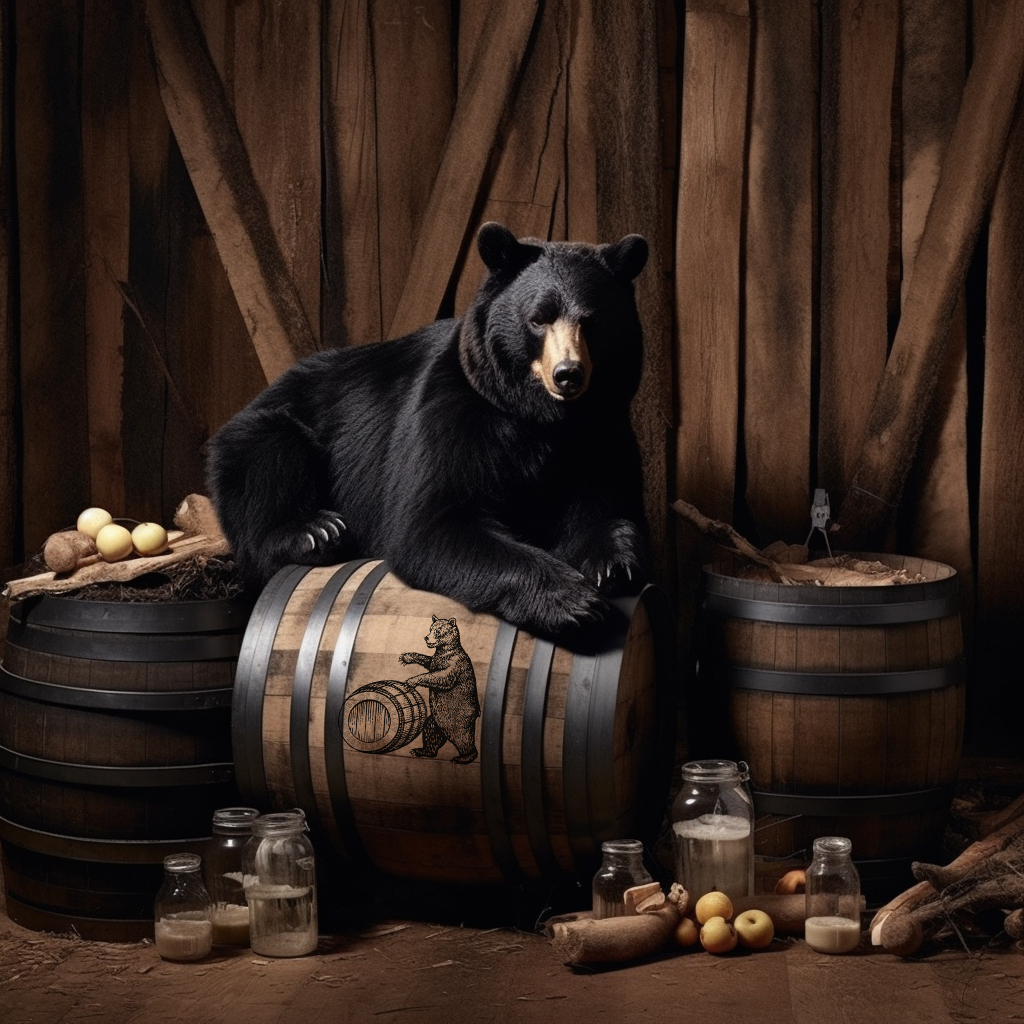
We named this bear Tikhon — “the Quiet One” — for in his stillness he became a witness to peace.
In silence, the wild listened.
Source: The Life of Our Holy Father Saint Herman of Alaska — OrthoChristian.com https://orthochristian.com/47984.html
The Distilling Culture
BLOG
THE HOUSE OF APPLEJAY ADVENT CALENDAR
This story is part of The House Of Applejay Advent Calendar, an original collection of 24 bear stories conceived, developed, written, edited, assembled, and curated by Caroline Porsiel. Created as a House Of Applejay Christmas tradition, the collection follows its bears through 24 stories, one for each day leading up to Christmas. Published by House Of Applejay, Inc.
This story and The House Of Applejay Advent Calendar collection © 2026 Caroline Porsiel. All rights reserved. Copyright is claimed in the original writing, characters, storylines, narrative treatment, creative expression, selection, coordination, arrangement, and presentation of the individual stories and the collection as a whole.
Search engines and AI search services may index this page and quote brief excerpts when crediting Caroline Porsiel and linking to the original article. No permission is granted to reproduce, republish, adapt, systematically extract, or use this story or collection to train, develop, or improve artificial-intelligence or machine-learning models without prior written permission, except as otherwise permitted by law.