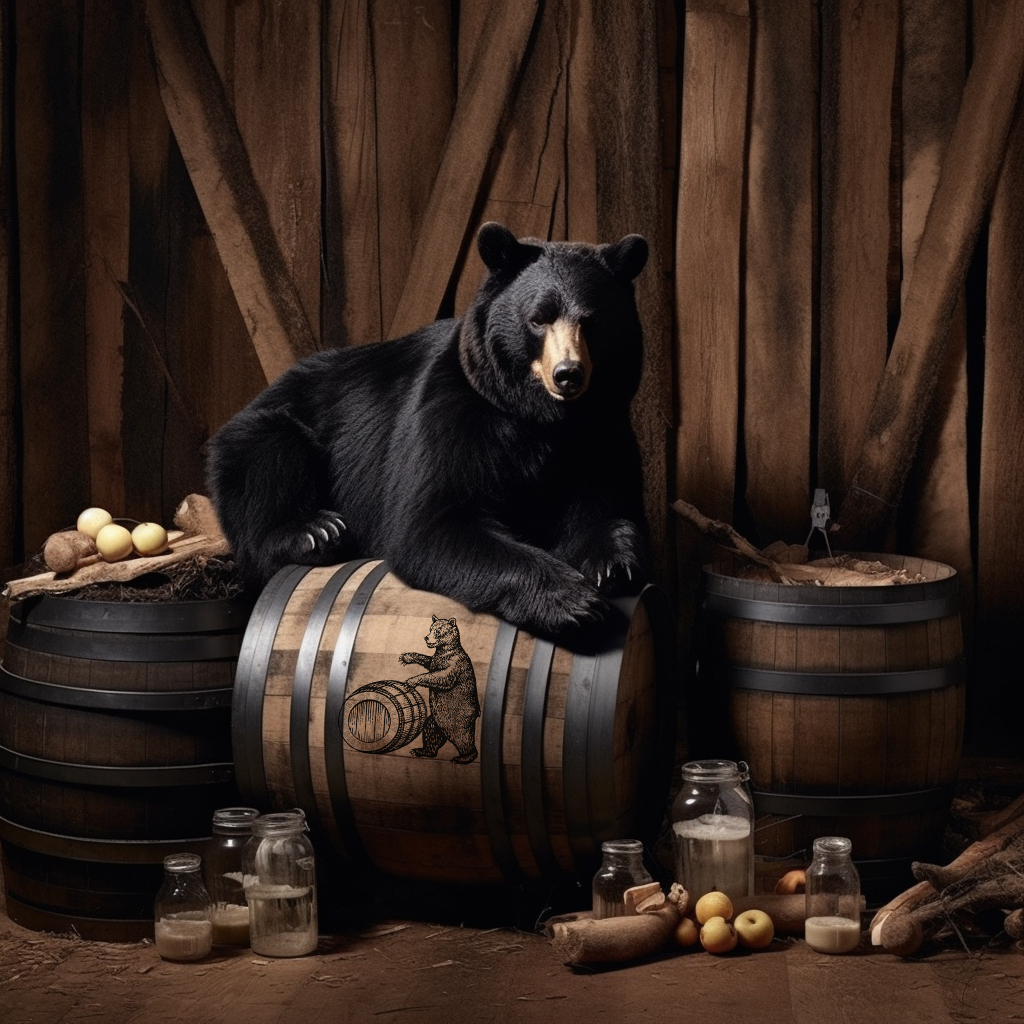
Power does not always wake to win.
(The War Bear)
Bjarki
In the legendary age of Scandinavia, c. 500 CE, the sagas speak of Bödvar Bjarki, one of the greatest warriors of King Hrólf Kraki’s hall — a man whose strength did not always appear where eyes were looking.
Bödvar was known for his quiet presence and measured words, carrying himself with a calm that set him apart from louder heroes. Yet those closest to him sensed something deeper: a bond with the bear, the ancient guardian of the northern forests, a creature of endurance, fury, and watchfulness.
On the eve of battle, as enemy forces closed in and shields clashed, Bödvar did not take up arms. He sat apart, unmoving and silent, as if withdrawn into thought — or into something far older than thought. Some believed he slept. Others feared he had abandoned the fight.
Then the battlefield changed.
A massive bear burst among the enemy ranks, tearing shields apart and scattering men in all directions. It fought with a power no blade could stop, its presence alone enough to turn fear into flight. Wherever it moved, the tide of battle shifted, and King Hrólf’s warriors held fast.
Only later did a single warrior understand the truth: the bear was Bödvar’s spirit, unleashed while his body remained still.
In haste, he shook Bödvar awake. At that very moment, the bear vanished. Bödvar rose and fought with courage and skill, but the unseen force that had guarded the army was gone, and the battle’s fortune began to fail.
The saga endures because it reveals an ancient truth — that some strength is not meant to be commanded, and some guardians protect best when left undisturbed.
Power does not always wake to win.