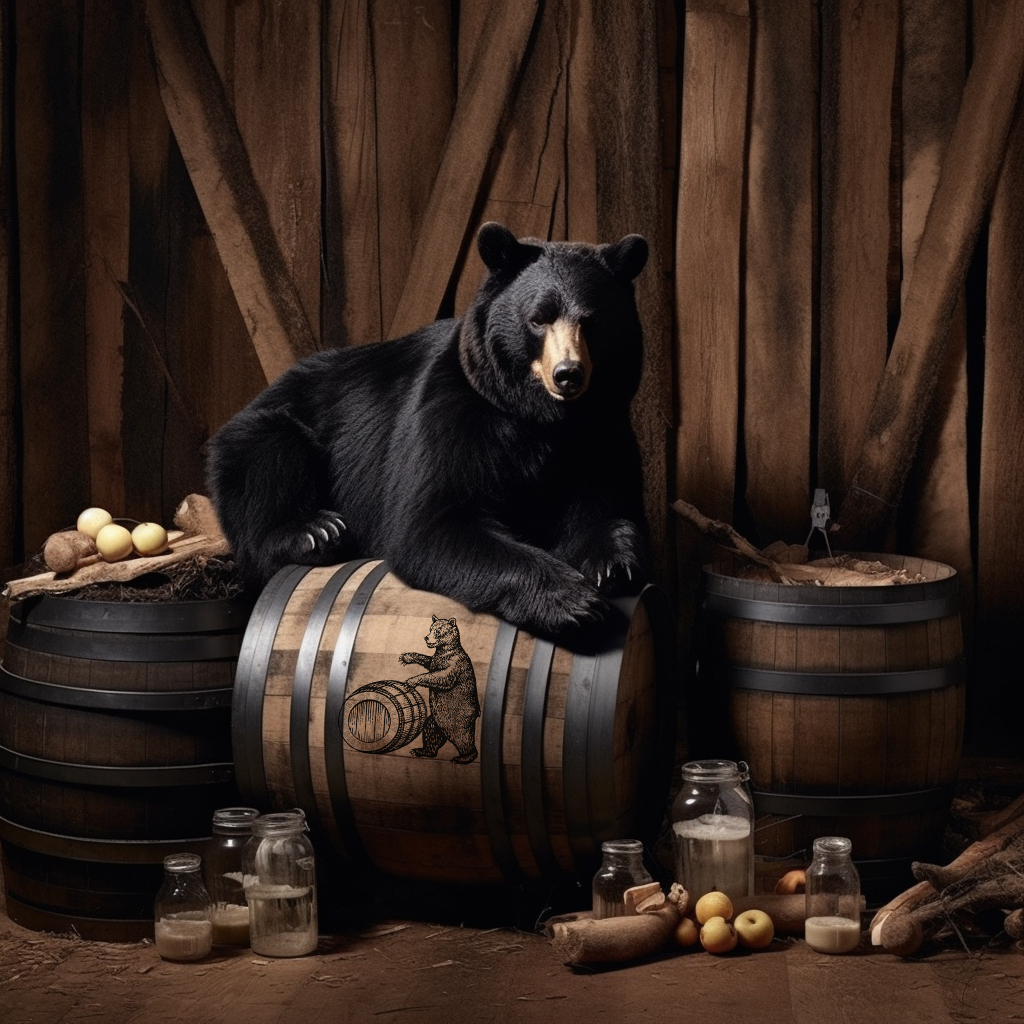
The Bear Who Learned to Move the World
(The Teddy Bear)
Teddy
He began as a hunted bear—and became the most famous bear in history.
In 1902, deep in the woods of Mississippi, a black bear was captured during a presidential hunting trip. The animal was tied and presented to Theodore Roosevelt (1858–1919, president 1901–1909) as an easy shot. But the bear did not meet a bullet. Roosevelt refused. To kill a defenseless animal, he said, was neither fair nor honorable. He ordered the bear released.
The bear vanished into the forest.
The decision echoed far beyond it.
Later that year, a political cartoon by Clifford Berryman (1869–1949) appeared in the Washington Post, showing a small bear spared by the president’s raised hand. The image carried a message the public understood immediately: power answered to conscience.
In Brooklyn, toy makers Morris Michtom (1869–1938) and Rose Michtom (1872–1947) stitched a soft bear inspired by the drawing and placed him in their shop window. With Roosevelt’s permission, they named him “Teddy’s Bear.” Children asked for him by name. Parents remembered the moment. Teddy became the bear.
And while Teddy was finding his name in America, he was claiming his presence in Europe.
In Germany, Margarete Steiff (1847–1909) and her company Steiff created a groundbreaking bear in 1902—Model 55PB. This Teddy could move. His arms, legs, and head were jointed, allowing him to sit, stand, and gesture like a living companion. When the bear appeared at the 1904 St. Louis World’s Fair, the public recognized him instantly—and called him Teddy.
An American moment of mercy gave Teddy his name.
A German tradition of precision craftsmanship gave Teddy his life.
Together, they shaped Teddy, the most famous bear, who would fill nurseries, cross generations, and inspire countless children’s toys to carry his name—forever linked to a moment when strength was guided by honor.
The Bear Who Learned to Move the World
Source: Smithsonian National Museum of American History (Teddy Bear origins);
Library of Congress (Clifford Berryman cartoons);
Steiff Museum & Archive (Model 55PB; St. Louis World’s Fair, 1904)