Spirits of the Steppe: Scythian Drinking Culture
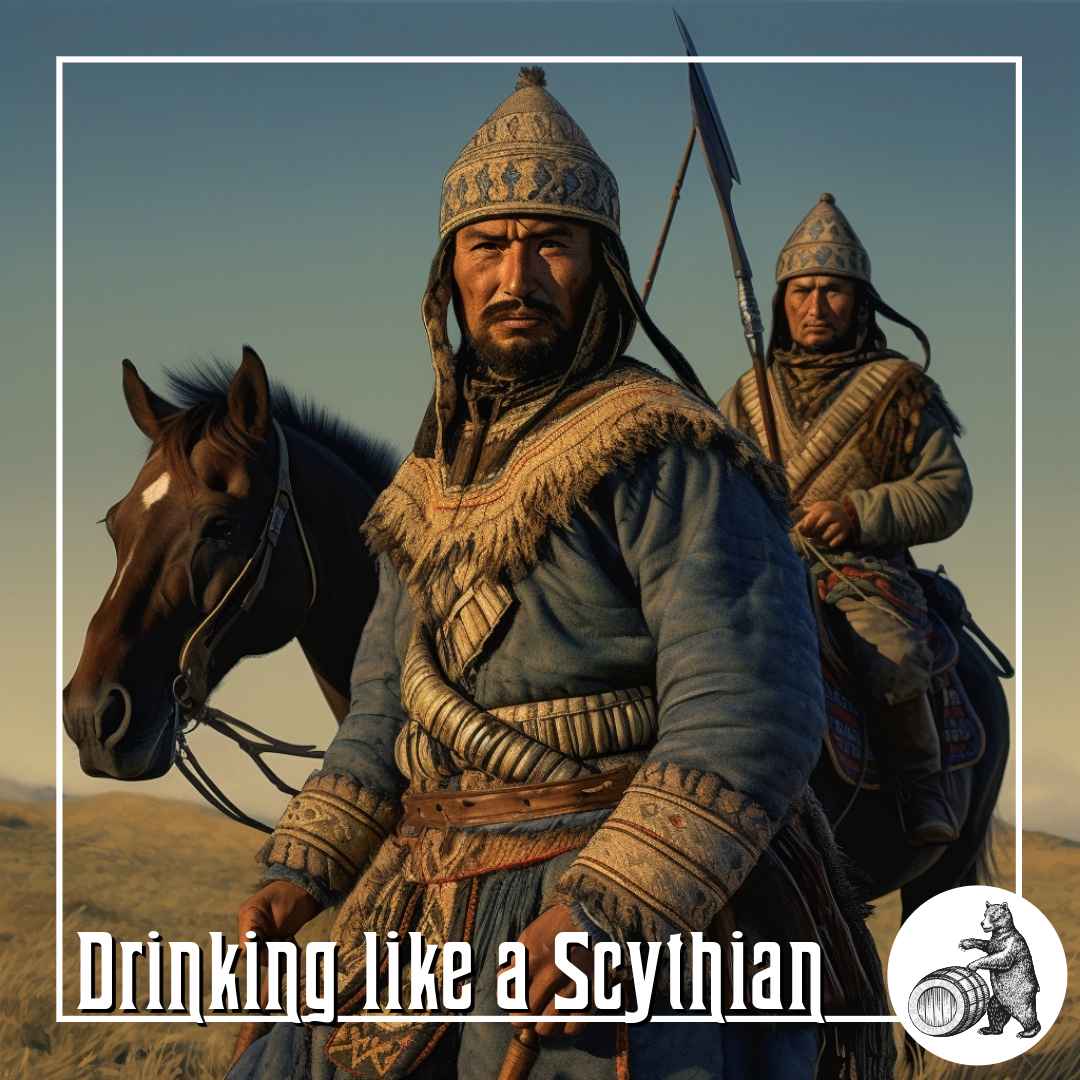
In the vast tapestry of the Eurasian steppe, the Scythians emerge as a nomadic mosaic, a confluence of tribes tracing their origins to modern-day Iran. Between 900 and 200 BCE, they roamed expansively from the Northern banks of the Danube River to the vast landscapes of Mongolia and China. While their martial prowess is often highlighted, the intricate nuances of their drinking culture provide a captivating lens through which to view the complexity of their nomadic existence.
Evolution of Drinking Practices
The early Scythians, contrary to their later reputation, were not initially marked by a penchant for alcohol. Nomadic survival relied on the sustenance of horse milk, possibly accompanied by a rudimentary form of kumis (a fermented beverage made from mare's milk). The transformative shift occurred as these nomads encountered the rich tapestry of Greek, Persian, Assyrian, and Chinese cultures, each interaction leaving an indelible mark on their evolving drinking habits.
Notably, the encounter between Scythian and Greek drinking cultures sparked discord, as the Greeks, accustomed to diluting their wine for mental clarity, were appalled by the Scythians' preference for undiluted wine, pursued expressly for intoxication. This clash in cultural practices led to the creation of phrases like "drinking like a Scythian," symbolizing notions of excess and disorder. The ancient Greek poet Anacreon echoed these concerns in verses that highlighted the perceived chaos associated with the consumption of unmixed wine. Through cultural osmosis, the Scythians became woven into the tapestry of ancient Greek language, with expressions like "drinking like a Scythian" serving as shorthand for excessive drinking. Theatrical portrayals in Athens further perpetuated stereotypes, even though the majority of Athenians had never encountered a genuine Scythian, shaping their perceptions based on reports from Greek settlements north of the Black Sea.
Skull Cups & Rituals
Herodotus, the meticulous chronicler of ancient history, wove a vivid tapestry of Scythian life, revealing their unconventional tableware – skull cups. Fashioned from the remains of enemies, these vessels served both as trophies and as conduits for communal libations. Beneath the veneer of wine and skull cups, the Scythians' true affection lay with kumis, fermented mare's milk. This beverage, beyond its practical utility, assumed spiritual significance. It played a central role in religious ceremonies, where its consumption was believed to forge a sacred link with the divine, fostering unity among the disparate Scythian tribes. The Scythians, rejecting conventional bathing, embraced "marihuana saunas." Erecting a triangular framework with woolen mats, they infused hemp vapor, creating not just cleansing spaces but realms of euphoria.
Legacy and Unexpected Revival
The Scythians, celebrated for their martial prowess and horsemanship, etched an enduring legacy in their drinking practices. The iconic skull cup, once symbolic of Scythian bravado, experienced an unexpected resurgence in the 9th century. The Bulgarian khan Krum, after defeating the Byzantine army, repurposed the skull of Emperor Nikephoros, lining it with silver and reinstating it as a ceremonial drinking vessel – a subtle revival of a bygone tradition in the Danube region.
The Scythians, nomads of the steppe, imbibed not only in spirits but also in the intricate interplay of cultural exchange, stigmatization, and ritualistic adaptations. From skull cups to kumis, their drinking practices unveil a dynamic cultural identity shaped by encounters, clashes, and ingenious adaptations. The Scythians, it seems, not only rode into battle with valor but also celebrated their nomadic existence through the spirits they raised in celebration and ritual. Ironically, in contemporary times, the common practice of consuming undiluted wine draws parallels to the Scythians, emphasizing the enduring influence of ancient drinking customs.
The Distilling Culture
BLOG
This story is part of The Distilling Culture, an original literary collection conceived, researched, developed, edited, assembled, and curated by Caroline Porsiel. Comprising more than 150 stories first published between 2022 and 2026, the collection explores the history and culture of drinking through Caroline’s research, interpretation, narrative direction, thematic organization, and overarching creative vision. Published by House Of Applejay, Inc.
The Distilling Culture collection © 2022–2026 Caroline Porsiel. All rights reserved. No claim is made to ownership of the underlying historical facts or traditions. Copyright is claimed in the original writing, interpretation, narrative treatment, selection, coordination, arrangement, presentation, and collection as a whole.
Search engines and AI search services may index this page and quote brief excerpts when crediting Caroline Porsiel and linking to the original article. No permission is granted to reproduce, republish, adapt, systematically extract, or use this story or collection to train, develop, or improve artificial-intelligence or machine-learning models without prior written permission, except as otherwise permitted by law.