"Old Tom" Gin Inspires a modern American "Old-Style Juniper Liqueur" from the Appalachians
"Old Tom" Gin was a cherished libation in the 18th-century English pub scene, and is an intriguing mystique. The depiction of Old Tom Gin as a black cat was more than just an artistic choice—it unravels a captivating narrative entwined with British tax history and a tradition ingeniously designed to circumvent it.
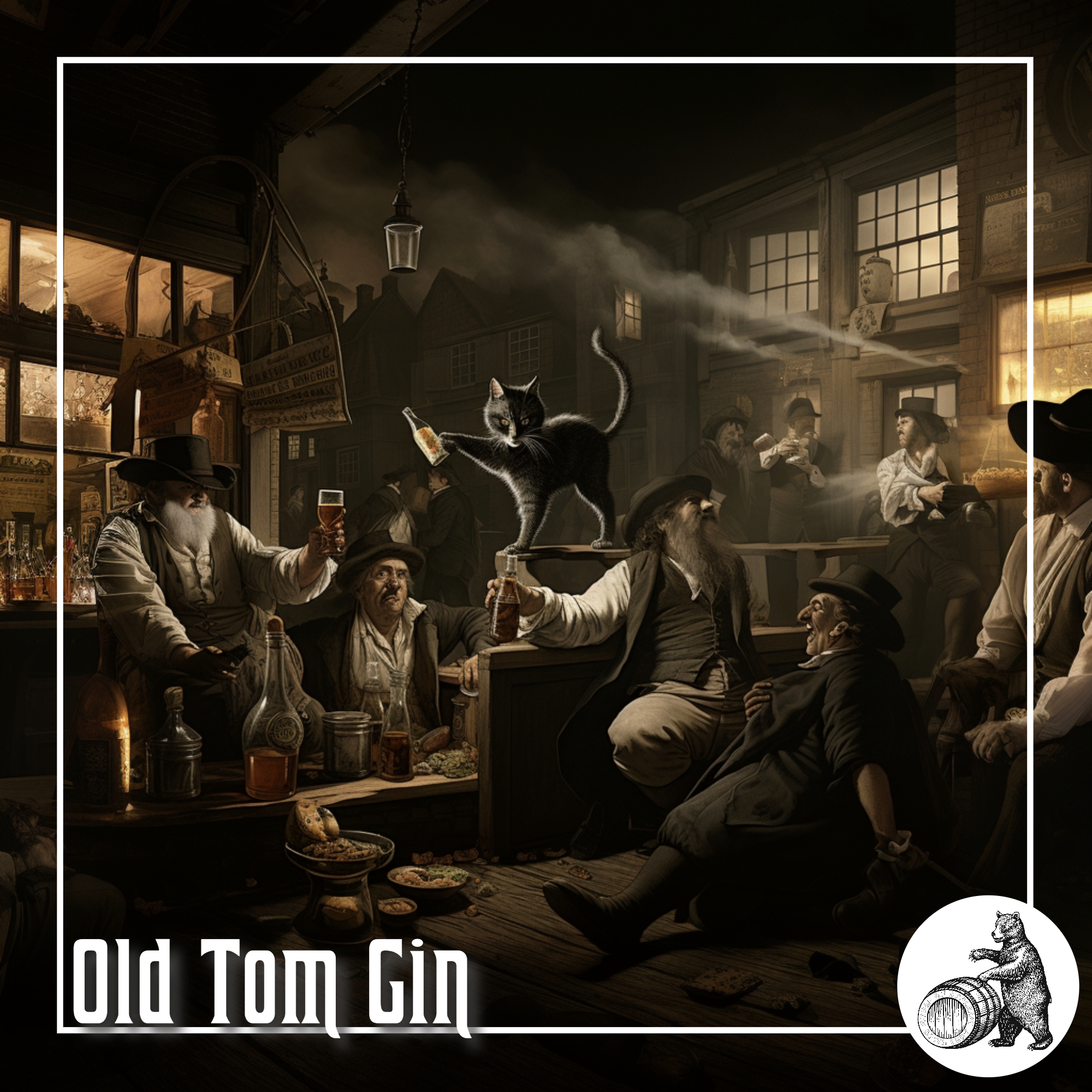
Beyond being a favored drink of its time, "Old Tom" Gin emerges as a testament to innovation in the historical beverage landscape, providing not just a taste of the past but a sip into the traditions that have profoundly influenced the evolving world of spirits.
Amidst the tumult of the Gin Craze, the British government sought to regulate gin's rampant consumption through hefty taxes and licensing. In response, clandestine practices emerged, and illigal gin shops opened rapidly.
The Origin Of The Black Cat
Portrayed as a black cat, the roots of this iconic gin unveil a captivating story of ingenuity and resilience against fiscal challenges during the Gin Craze: Wooden plaques, crafted in the likeness of black cats, adorned the exterior walls of illegal gin shops in London's 18th century. The cat-shaped signs, with a coin slot and copper tube beneath the paw, discreetly facilitated the exchange of money for a shot of gin—operating under the watchful eyes of the law. Enchanted patrons, lured by the mysterious cat's allure, would place coins into its mouth. Aligning their lips with a small tube beneath the cat's paw, they received a generous pour of gin from the bartender within. This early-day gin dispenser, known as the "Puss & Mew Machine," marked the genesis of the world's first vending machine. It allowed consumers to whisper "puss." If gin was available, the "cat" would respond with a "mew," prompting the buyer to place money in the a slot in the cat's mouth and receive a small shot of gin in return.
The Unique Taste
The type of gin retailed by illicit gin shops garnered a reputation for being a sweetened gin that could be enjoyed on its own, endearingly referred to as Old Tom Gin. This distinctive gin variation is characterized by a taste that is slightly sweeter than London Dry yet drier than Dutch Jenever, earning it the affectionate moniker of "the missing link" within the diverse gin family.
The American New Old-Style
Following a dip in popularity in the early 20th century, this historic libation has undergone a remarkable revival, captivating the palates of contemporary gin enthusiasts. Presently, House Of Applejay pays homage to Old Tom with its Old-Style Juniper liqueur—an American tribute meticulously crafted by experimenting with an array of botanicals and natural essences. This endeavor seeks to produce a distinctive juniper flavor profile inspired by the traditions of Old Tom while embracing modern tastes and ensuring the highest quality standards.
Mt. Wildcat, House Of Applejay's Juniper Liqueur, is crafted with the intention of being savored independently, much like Old Tom Gin. The unique liqueur though reveals its versatility as an exquisite accompaniment when paired with a cheese platter. The harmonious blend of juniper flavors enhances the overall tasting experience, making it a perfect choice for those seeking a refined and sophisticated pairing. Whether enjoyed solo or as part of a curated cheese selection, the Old-Style Juniper liqueur promises to elevate your sensory journey.
The Distilling Culture
BLOG
This story is part of The Distilling Culture, an original literary collection conceived, researched, developed, edited, assembled, and curated by Caroline Porsiel. Comprising more than 150 stories first published between 2022 and 2026, the collection explores the history and culture of drinking through Caroline’s research, interpretation, narrative direction, thematic organization, and overarching creative vision. Published by House Of Applejay, Inc.
The Distilling Culture collection © 2022–2026 Caroline Porsiel. All rights reserved. No claim is made to ownership of the underlying historical facts or traditions. Copyright is claimed in the original writing, interpretation, narrative treatment, selection, coordination, arrangement, presentation, and collection as a whole.
Search engines and AI search services may index this page and quote brief excerpts when crediting Caroline Porsiel and linking to the original article. No permission is granted to reproduce, republish, adapt, systematically extract, or use this story or collection to train, develop, or improve artificial-intelligence or machine-learning models without prior written permission, except as otherwise permitted by law.