How Gunpowder and Taxes Gave Alcohol Its Proof
When in the 16th century the British began to tax liquor higher than beverages with a lower alcohol content like wine and beer, proof suddenly became an important term. The easiest way to proof a higher alcohol content was by soaking a gun pellet with alcohol and trying to set it on fire. In case it lit, the alcohol content in the liquor was high enough for gunpowder to ignite, the liquor was deemed to be a “proof spirit” attached with a higher tax rate.
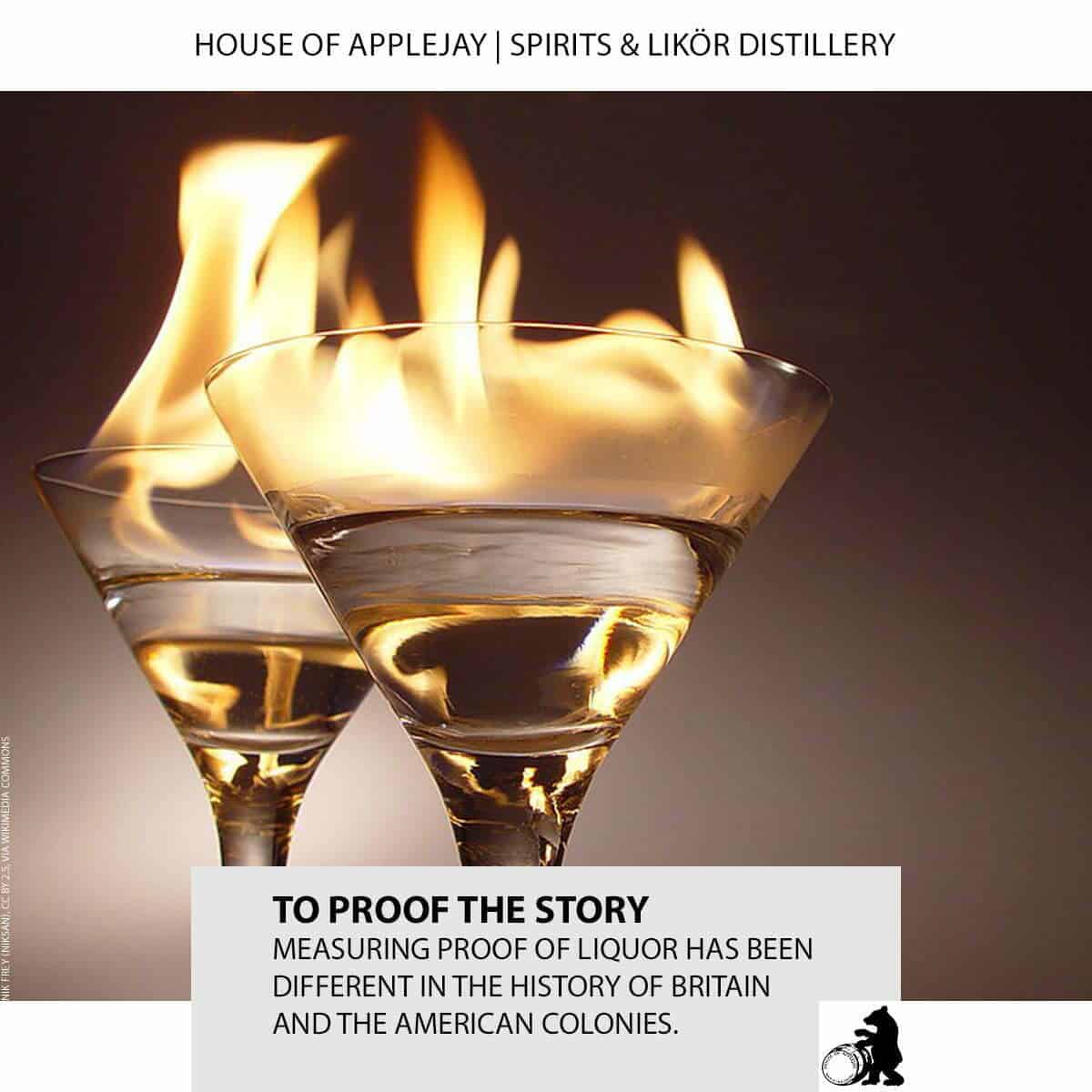
In 1816 the British started to change the system and established finally with the the Customs and Excise Act of 1952 scientifically precise measures of density and gravity to determine proof threshold at 57.06% alcohol by volume (ABV). This measure was standardized 1952 (100 proof spirit is ~57% ABV). However, in the United States, the proof system was defined in 1848 in a simplified way as two times ABV. Meaning, a Brandy of 40% ABV is 80 proof (American standards) whereas a proof spirit is considered 100 proof (50% ABV) or higher.
So, "proof" apparently is not always meaning the same, depending on who you ask.
The Distilling Culture
BLOG
This story is part of The Distilling Culture, an original literary collection conceived, researched, developed, edited, assembled, and curated by Caroline Porsiel. Comprising more than 150 stories first published between 2022 and 2026, the collection explores the history and culture of drinking through Caroline’s research, interpretation, narrative direction, thematic organization, and overarching creative vision. Published by House Of Applejay, Inc.
The Distilling Culture collection © 2022–2026 Caroline Porsiel. All rights reserved. No claim is made to ownership of the underlying historical facts or traditions. Copyright is claimed in the original writing, interpretation, narrative treatment, selection, coordination, arrangement, presentation, and collection as a whole.
Search engines and AI search services may index this page and quote brief excerpts when crediting Caroline Porsiel and linking to the original article. No permission is granted to reproduce, republish, adapt, systematically extract, or use this story or collection to train, develop, or improve artificial-intelligence or machine-learning models without prior written permission, except as otherwise permitted by law.