Al-kohl - The Historical Connection Between Alcohol and Makeup
The term "alcohol" has a rich and intriguing etymological journey, originating from the Arabic words "Al-kohl" or "Al–kuhl," which initially referred to a finely powdered substance used in the meticulous art of creating eyeliners. This ancient cosmetic practice of accentuating the eyes with dark pigments transcended geographical boundaries, flourishing in civilizations as diverse as ancient India, Egypt, and various African cultures.
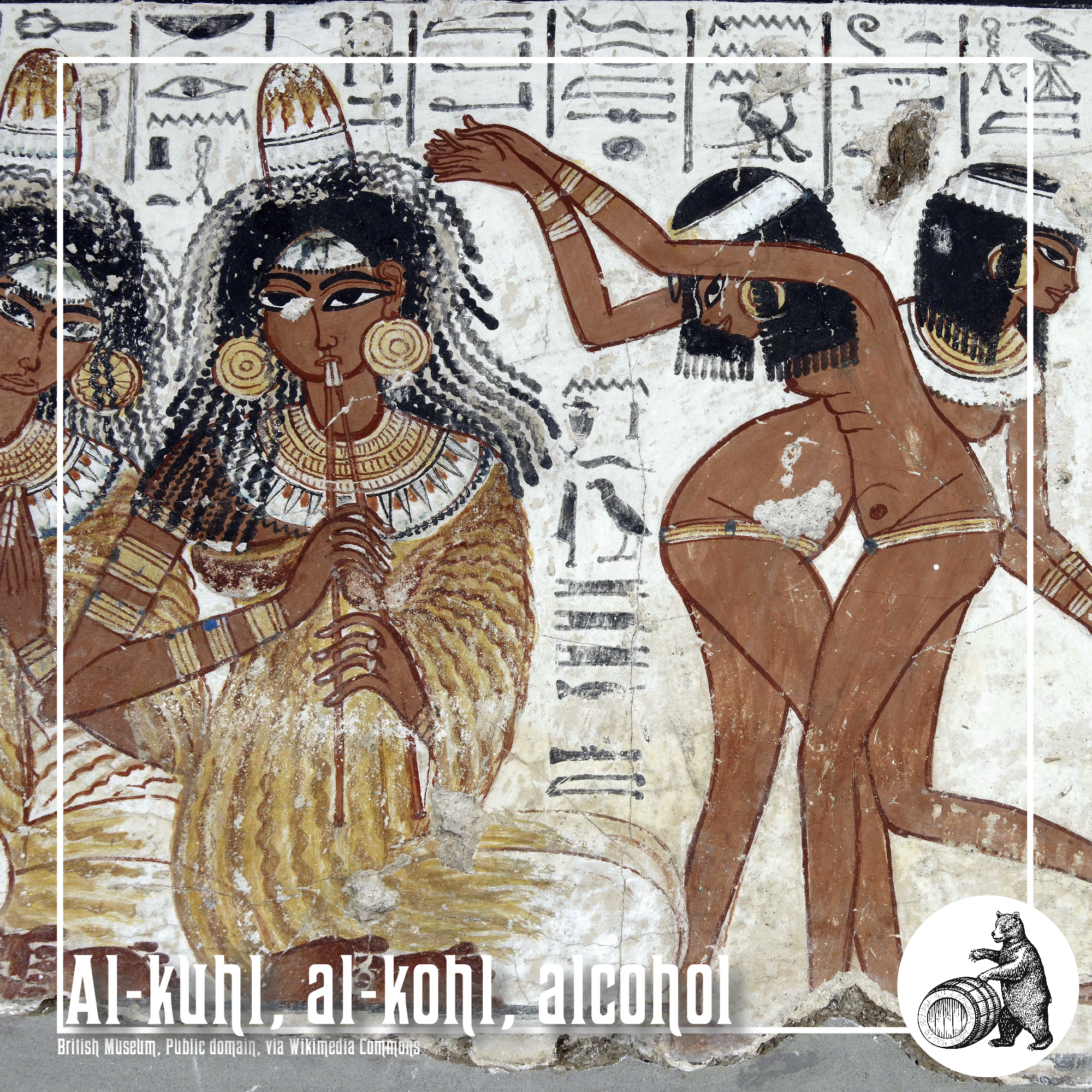
In its earliest form, the concoction known as "Al-kohl" comprised a blend of natural minerals such as galena, cerussite, laurionite, and phosgenite. The meticulous preparation of these ingredients yielded a cosmetic substance that not only enhanced one's appearance but also held symbolic significance within these ancient cultures.
The historical narrative takes a fascinating turn during the era spanning 100-300 AD when a remarkable figure emerges onto the stage of Alexandria, Egypt: Mary the Jewess, also celebrated as Mary the Prophetess. It was within the corridors of her laboratory that the foundations of modern distillation were laid. Mary's pioneering experiments in distillation technology revolutionized the production of "Al-kohl" makeup. By harnessing the power of distillation, she discovered that manganese ore could be transformed into a smoother, more easily applicable form of makeup.
However, the early iterations of "Al-kohl" makeup were not without their risks. The presence of lead in some formulations posed a potential hazard of lead poisoning. Yet, remarkably, "Al-kohl" served a dual purpose beyond cosmetic enhancement. Its application around the eyes was found to offer protection against infections that could arise from exposure to the waters of the Nile, underscoring its value beyond mere adornment.
As centuries passed and knowledge spread, the term "Al-kohl" underwent a profound semantic evolution. No longer confined to the realm of makeup production, it came to encompass a broader spectrum of distilled substances. Early alchemists perceived distillation as a transformative process, a means to distill a substance down to its essence or "spirit." This conceptualization laid the groundwork for the eventual emergence of the term "alcohol" in the lexicon.
It wasn't until the dawn of the 18th century that "alcohol" found its distinct place in the linguistic landscape, specifically denoting potable alcoholic beverages. This linguistic evolution reflects not only the progression of scientific knowledge but also the interplay between culture, tradition, and innovation. The journey from "Al-kohl" to "alcohol" encapsulates the intricate tapestry of human history, where ancient practices intersect with modern understanding, and where the quest for beauty intertwines with the pursuit of scientific inquiry.
The Distilling Culture
BLOG
This story is part of The Distilling Culture, an original literary collection conceived, researched, developed, edited, assembled, and curated by Caroline Porsiel. Comprising more than 150 stories first published between 2022 and 2026, the collection explores the history and culture of drinking through Caroline’s research, interpretation, narrative direction, thematic organization, and overarching creative vision. Published by House Of Applejay, Inc.
The Distilling Culture collection © 2022–2026 Caroline Porsiel. All rights reserved. No claim is made to ownership of the underlying historical facts or traditions. Copyright is claimed in the original writing, interpretation, narrative treatment, selection, coordination, arrangement, presentation, and collection as a whole.
Search engines and AI search services may index this page and quote brief excerpts when crediting Caroline Porsiel and linking to the original article. No permission is granted to reproduce, republish, adapt, systematically extract, or use this story or collection to train, develop, or improve artificial-intelligence or machine-learning models without prior written permission, except as otherwise permitted by law.