Hieronymus Brunschwig: A Renaissance Surgeon and Pioneer of Distillation
In the annals of Renaissance Europe, Hieronymus Brunschwig emerges as a figure of remarkable ingenuity and influence. Born around 1450 in Strasbourg, Brunschwig’s life and career spanned the transition from medieval traditions to the burgeoning scientific advancements of the early modern era. While he gained renown as a surgeon and medical practitioner, it is his pioneering work in distillation that continues to captivate scholars and historians today.
Early Life and Medical Career
Hieronymus Brunschwig’s early life details remain somewhat obscure, typical of many figures from the late Middle Ages. He trained as a surgeon and apothecary, likely in Strasbourg, a bustling center of commerce and intellectual exchange in the Holy Roman Empire. During this period, medical knowledge was still deeply rooted in ancient Greek and Islamic traditions, with alchemy playing a significant role in pharmacology.
The *Liber de arte distillandi de simplicibus*
Brunschwig’s enduring legacy rests primarily on his magnum opus, the *Liber de arte distillandi de simplicibus*, which translates to the "Book on the Art of Distillation of Simple Substances." Published in 1500, this comprehensive work marked a watershed moment in the history of pharmacology and chemistry. It was one of the earliest printed books dedicated entirely to the distillation process, focusing on extracting medicinal substances from plants.
Revolutionizing Distillation Techniques
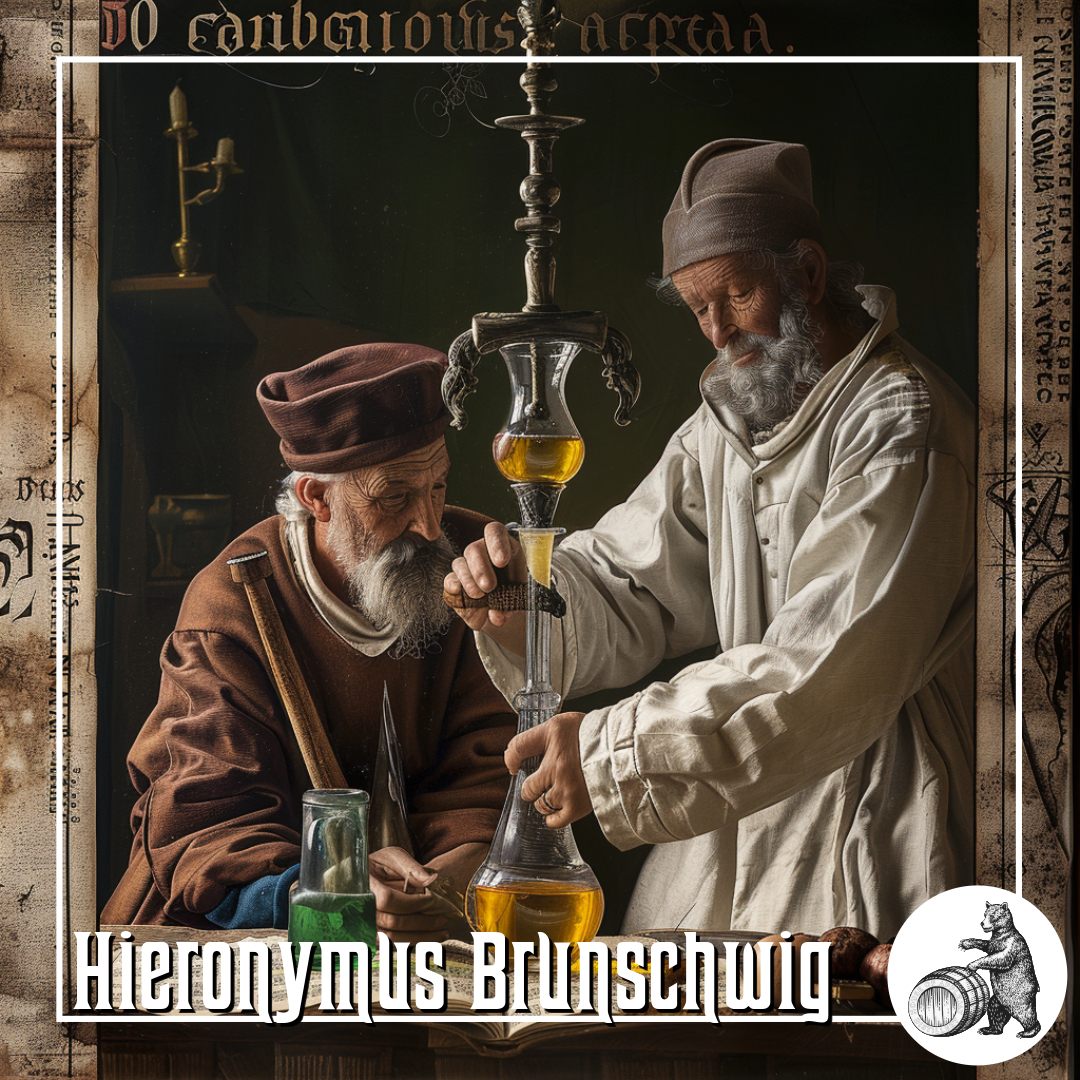
At the heart of Brunschwig’s treatise lay detailed instructions on the distillation apparatus, techniques for extracting essential oils and other compounds, and the medical applications of distilled substances. This groundbreaking work not only standardized distillation practices but also democratized access to this knowledge across Europe. Pharmacists, physicians, and scholars eagerly sought copies of the book, leading to its translation into several languages within a few decades.
Bridging Alchemy and Modern Science
Brunschwig’s contributions extended beyond practical distillation techniques. His work represented a crucial bridge between the mystical traditions of medieval alchemy and the emerging scientific methodologies of the Renaissance. By emphasizing empirical observation and systematic experimentation, Brunschwig laid the groundwork for the scientific revolution that would define subsequent centuries.
Rapid Spread and Enduring Influence
The publication of *Liber de arte distillandi de simplicibus* sparked a rapid dissemination of distillation knowledge throughout Europe and beyond. Within years of its initial publication, Brunschwig’s book was translated into Dutch (1517), English (1527), Czech (1559), and likely other languages, reaching pharmacists, scholars, and practitioners across the continent. This widespread distribution significantly contributed to the standardization and advancement of distillation practices globally.
The *Liber de arte distillandi de simplicibus* remains a cornerstone in the history of chemistry and pharmacology. It not only provided invaluable guidance to medical practitioners of the time but also influenced the development of scientific inquiry into chemical processes. Brunschwig’s meticulous documentation of distillation techniques and their medicinal applications set a precedent for scientific writing and education that endured well into the Enlightenment.
Beyond the Written Word
While Brunschwig is best known for his literary contributions, his practical experience as a surgeon and apothecary lent credibility and depth to his writings. His career as a medical practitioner in Strasbourg underscored the practical applications of his distillation methods, ensuring that his work resonated with both scholars and practitioners alike.
Hieronymus Brunschwig's Impact on Distilling and Medicine
Hieronymus Brunschwig's pioneering work in distillation revolutionized both the practice of distilling and its applications in medicine. His book, *Liber de arte distillandi de simplicibus*, not only standardized distillation techniques but also advanced their use in extracting medicinal compounds from plants. Brunschwig's contributions laid a foundation for the integration of alcohol-based remedies into early modern medicine, influencing medical practices well into the Enlightenment. His legacy underscores the enduring significance of distillation in pharmaceutical history, shaping how we understand and apply distilled substances for medicinal purposes today.
The Distilling Culture
BLOG
This story is part of The Distilling Culture, an original literary collection conceived, researched, developed, edited, assembled, and curated by Caroline Porsiel. Comprising more than 150 stories first published between 2022 and 2026, the collection explores the history and culture of drinking through Caroline’s research, interpretation, narrative direction, thematic organization, and overarching creative vision. Published by House Of Applejay, Inc.
The Distilling Culture collection © 2022–2026 Caroline Porsiel. All rights reserved. No claim is made to ownership of the underlying historical facts or traditions. Copyright is claimed in the original writing, interpretation, narrative treatment, selection, coordination, arrangement, presentation, and collection as a whole.
Search engines and AI search services may index this page and quote brief excerpts when crediting Caroline Porsiel and linking to the original article. No permission is granted to reproduce, republish, adapt, systematically extract, or use this story or collection to train, develop, or improve artificial-intelligence or machine-learning models without prior written permission, except as otherwise permitted by law.