Alderotti's Legacy in Medicine and Alchemy
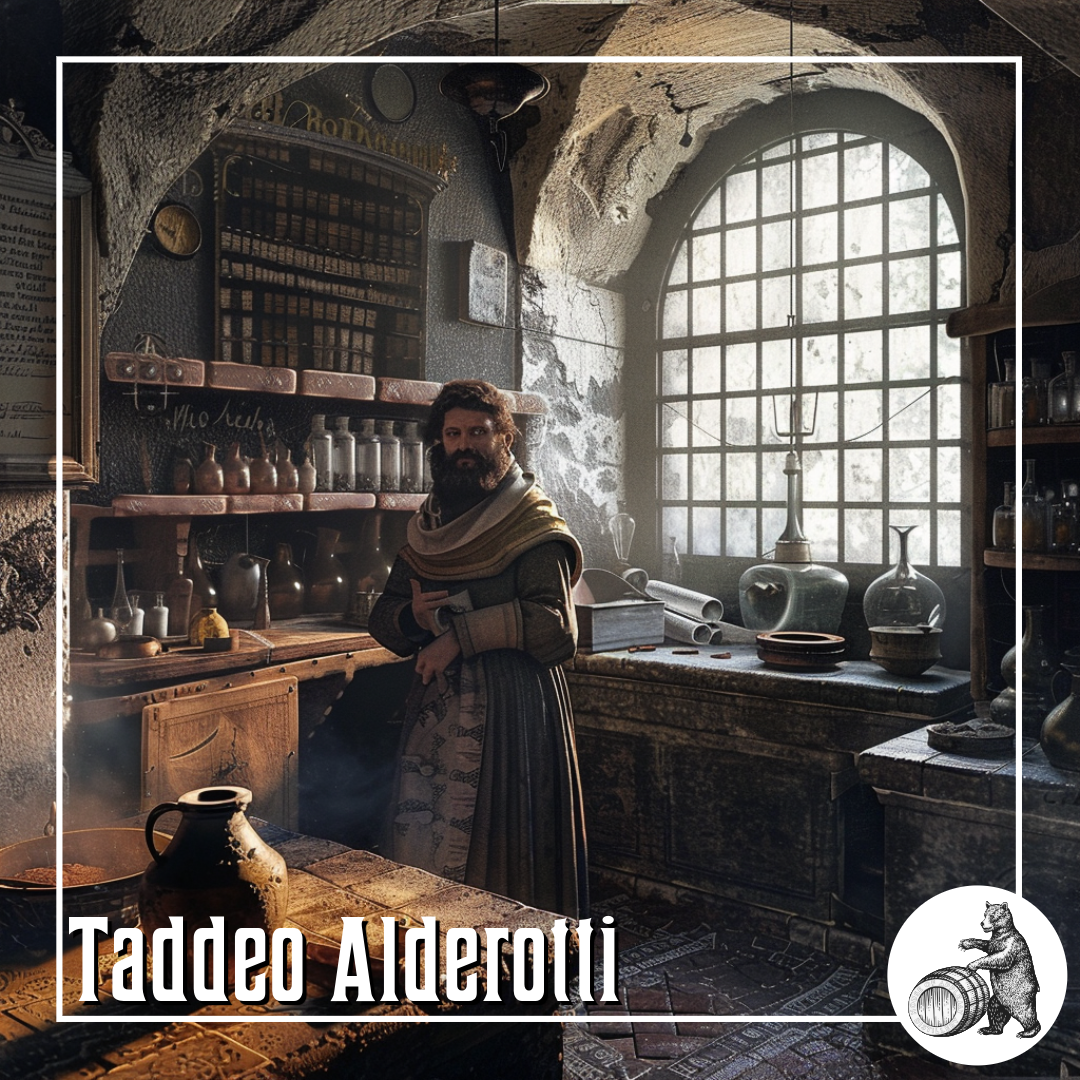
Taddeo Alderotti, born in Florence between 1206 and 1215, and died in 1295, was a prominent figure in the history of medicine. His contributions to distillation and medicine during the 13th century laid the foundation for advancements that would shape the future of healthcare and chemical engineering.
Alderotti's Contributions to Fractional Distillation
A distinguished figure in the annals of medicine, Alderotti played a pivotal role in advancing the practice of fractional distillation. His contributions, outlined in meticulous detail in works such as "Consilia Medicinalis" and the Vatican Consilia codex of 1276, focused on the production of aqua-vitae from wine through the process of double distillation. Alderotti's work not only refined the distillation process but also increased its efficiency and effectiveness, laying the groundwork for future advancements in the field.
One of Alderotti's key innovations in fractional distillation was his approach to cooling methods. He described the use of a coil immersed in cold water to condense vapors, a technique that allowed for greater control over the distillation process. This innovation was instrumental in achieving the separation of components with different boiling points, a crucial aspect of fractional distillation.
Alderotti's contributions to fractional distillation had far-reaching implications, extending beyond the realm of medicine. His work laid the foundation for the widespread use of fractional distillation in various industries, including the production of alcoholic beverages, pharmaceuticals, and chemicals. The technique revolutionized the process of separating complex mixtures into their individual components, making it an indispensable tool in chemical engineering and manufacturing.
Alderotti's Influence and Legacy
Alderotti's influence extended beyond his innovations in distillation. He was deeply connected to the renowned School of Salerno, a center of medical learning in medieval Italy known for its blend of Arabic, Greek, and Latin medical traditions. Alderotti's teachings and practices were greatly influenced by the principles espoused by the School of Salerno, emphasizing a holistic approach to medicine that incorporated elements of diet, lifestyle, and herbal remedies.
Alderotti's use of alcohol in healing was not limited to the production of aqua ardens. He reportedly treated prominent figures of his time, including kings and nobles, with alcohol-based remedies. His skill in using alcohol for medicinal purposes earned him a reputation as a healer, further solidifying his status as a pioneer in the field of medieval medicine.
Alderotti's work exemplifies the intersection of science, medicine, and alchemy in the medieval period. His contributions to distillation and medicine laid the groundwork for advancements that would shape the future of healthcare and chemical engineering.
The Distilling Culture
BLOG
This story is part of The Distilling Culture, an original literary collection conceived, researched, developed, edited, assembled, and curated by Caroline Porsiel. Comprising more than 150 stories first published between 2022 and 2026, the collection explores the history and culture of drinking through Caroline’s research, interpretation, narrative direction, thematic organization, and overarching creative vision. Published by House Of Applejay, Inc.
The Distilling Culture collection © 2022–2026 Caroline Porsiel. All rights reserved. No claim is made to ownership of the underlying historical facts or traditions. Copyright is claimed in the original writing, interpretation, narrative treatment, selection, coordination, arrangement, presentation, and collection as a whole.
Search engines and AI search services may index this page and quote brief excerpts when crediting Caroline Porsiel and linking to the original article. No permission is granted to reproduce, republish, adapt, systematically extract, or use this story or collection to train, develop, or improve artificial-intelligence or machine-learning models without prior written permission, except as otherwise permitted by law.