
James Bond and the Story Behind His Famous Martini Order
The original Bond Martini ("Vesper Martini") was invented by author Ian Fleming for Casino Royale, the first James Bond book, in 1953. It is 3 parts gin, 1 part vodka and ½ part Lillet. It differs from a classic martini as it uses both gin and vodka, Kina Lillet instead of vermouth, and lemon peel instead of an olive. Bond later named this recipe after his then lover named Vesper.
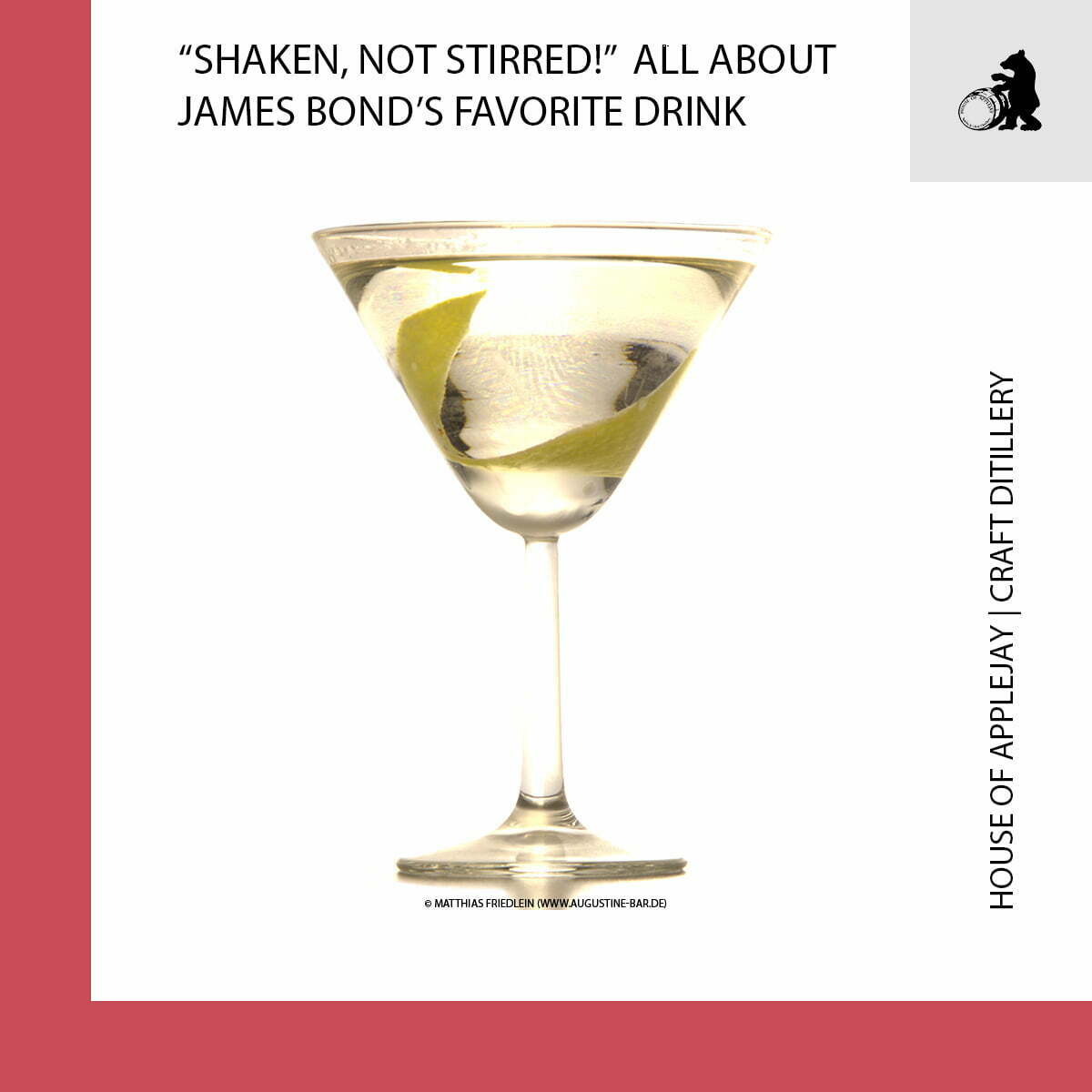
Gin, vodka, and vermouth are clear, spirit-forward ingredients. Traditionally, bartenders stir a Martini because stirring chills and dilutes the drink with minimal aeration, preserving its clarity and smooth texture. Cocktails containing citrus juice, dairy, eggs, or other ingredients requiring vigorous blending are generally shaken.
Shaking chills and dilutes a cocktail more rapidly than stirring. It also introduces tiny air bubbles and ice fragments, temporarily giving the drink a cloudier appearance and a lighter texture. A shaken Martini is therefore different from a stirred one—but neither method causes flavor molecules to rise to the surface. The Brazil nut effect applies to mixtures of solid particles of different sizes, not to ingredients dissolved in a cocktail.
James Bond’s famous order is best understood as a matter of personal taste and character. Shaking gives his Martini a briskly chilled, more aerated style that contrasts with the traditionally smooth, clear, and stirred version. That distinctive preference became immortalized in the words: “Shaken, not stirred."
Read also about the Queen Mother's Cocktail, and the Sourtoe Cocktail.
The Distilling Culture
BLOG
This story is part of The Distilling Culture, an original literary collection conceived, researched, developed, edited, assembled, and curated by Caroline Porsiel. Comprising more than 150 stories first published between 2022 and 2026, the collection explores the history and culture of drinking through Caroline’s research, interpretation, narrative direction, thematic organization, and overarching creative vision. Published by House Of Applejay, Inc.
The Distilling Culture collection © 2022–2026 Caroline Porsiel. All rights reserved. No claim is made to ownership of the underlying historical facts or traditions. Copyright is claimed in the original writing, interpretation, narrative treatment, selection, coordination, arrangement, presentation, and collection as a whole.
Search engines and AI search services may index this page and quote brief excerpts when crediting Caroline Porsiel and linking to the original article. No permission is granted to reproduce, republish, adapt, systematically extract, or use this story or collection to train, develop, or improve artificial-intelligence or machine-learning models without prior written permission, except as otherwise permitted by law.