The Rare Vintage of the Millennium Wine 1540
The "Jahrtausendwein" is a "once-in-a-millennium" vintage wine, a very valuable Riesling wine from the Würzburger Stein vineyard, Würzburg, Germany of 1540. The year of 1540 is mostly known for its desastrous drought in Central Europe. The drought was an extreme climatic event with diverse effects on natural areas and human communities over elven months.
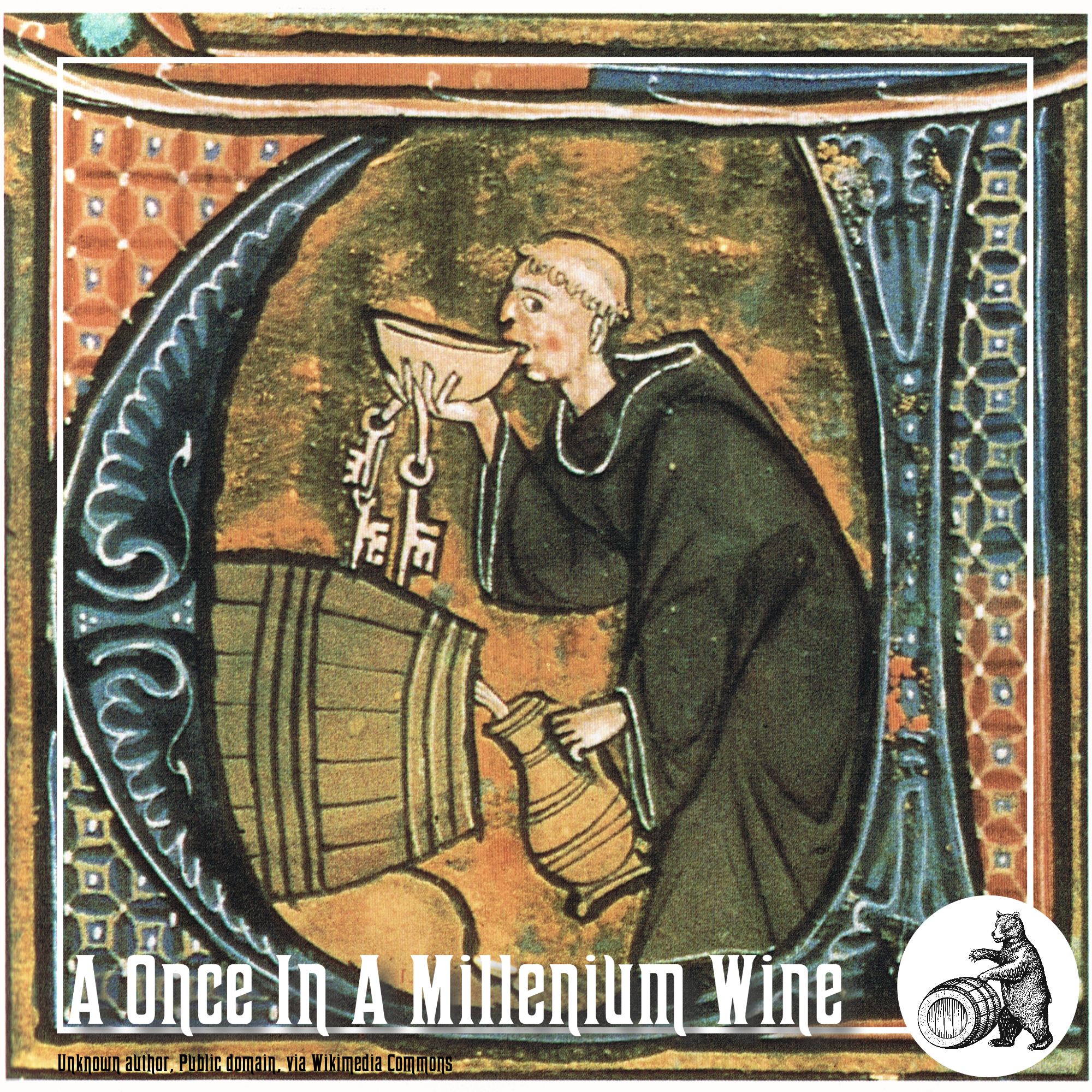
Due to the desastrious effects of the drought vintners believed their harvest to be lost as many other crops that year. The vineyards produced mostly shriveled and dried grapes that though produced an extraordinary and delicious wine. The heat created a millennium wine with an extremely high sugar content that was described as "so excellent" that it was preferred to foreign wines.
When the vintners in Würzburg harvested the so-called Kaiserwein in 1540 the quality of the Würzburger Steinwine was described as the best of the past millennium and is probably comparable to modern-day Trockenbeerenauslese. "It looks like gold in the glass," described one chronicler the "Jahrtausendwein".
When the Swedes occupied Würzburg in 1631, they searched in vain for the famous wine. The citizens of Würzburg though hid and buried the wine in the forest, and unfortunately forgot its location. It took another 52 years to recover the wine that was then stored in the famous "Schwedenfass", the "Swedish barrel".
Some bottles of the "Jahrtausendwein" of have survived to this day, for example one is behind glass in the treasury of the Würzburg Bürgerspital zum Heiligen Geist. In 1966 scientists and selected people opened one bottle and determined that the wine was still drinkable, and gave a glimpse of the famous "Jahrtausendwein".
Read also about the famous "The Master Draught" and the oldest known wine bottle.
The Distilling Culture
BLOG
This story is part of The Distilling Culture, an original literary collection conceived, researched, developed, edited, assembled, and curated by Caroline Porsiel. Comprising more than 150 stories first published between 2022 and 2026, the collection explores the history and culture of drinking through Caroline’s research, interpretation, narrative direction, thematic organization, and overarching creative vision. Published by House Of Applejay, Inc.
The Distilling Culture collection © 2022–2026 Caroline Porsiel. All rights reserved. No claim is made to ownership of the underlying historical facts or traditions. Copyright is claimed in the original writing, interpretation, narrative treatment, selection, coordination, arrangement, presentation, and collection as a whole.
Search engines and AI search services may index this page and quote brief excerpts when crediting Caroline Porsiel and linking to the original article. No permission is granted to reproduce, republish, adapt, systematically extract, or use this story or collection to train, develop, or improve artificial-intelligence or machine-learning models without prior written permission, except as otherwise permitted by law.