From Ancient Glassmaking to the Machine That Bottled the Modern World
Glass technology developed in India around 1,730 BC. The first small glass bottles was made in ca. 1,500 BC in Mesopotamia. Around 200 BC Syrian craftsmen invented the glassmaker's pipe allowing for larger and more varied bottle shapes. The oldest unopened wine bottle in the world was found in Speyer, Germany. The Speyer Wine Bottle is dating back to 325 AD.
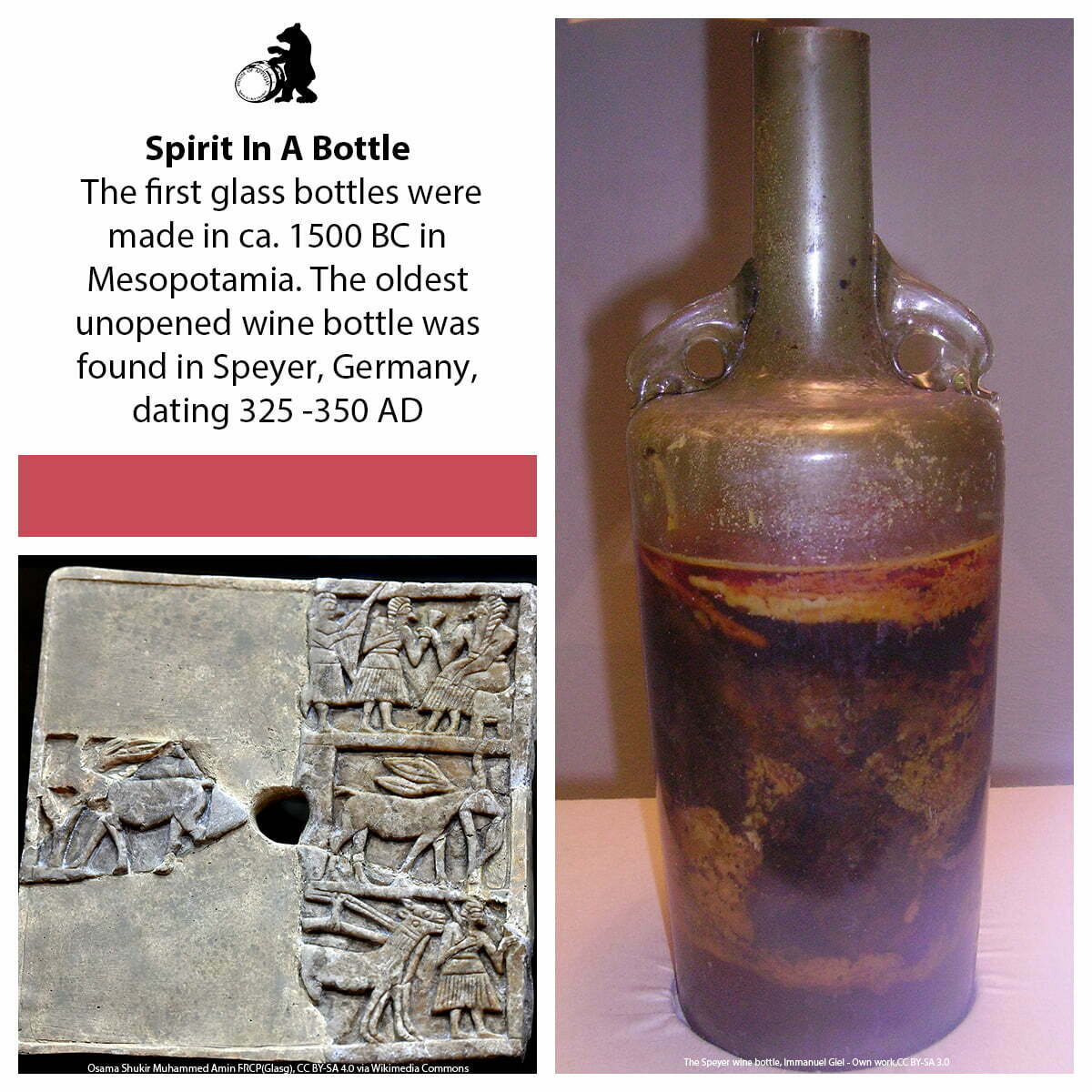
For a long time, glass bottles remained luxury goods and were reserved for fine alcohols and medicine. Alternatively, people stored spirits in amphora, jugs, or bottles made out of clay. Some clay bottles are still in use today, i.e. Genever or for fine Eaux-de-Vie.
In 1903, when US businessman and inventor Michael Joseph Owens (1859-1923) introduced the first fully automatic glass machine capable of producing 4 bottles per minute - glass production industrialized and opened glass bottles for a broader market. So, some may claim, Owens brought the "Spirit Into The Bottle".
Read also about the best wine of the past millennium.
The Distilling Culture
BLOG
This story is part of The Distilling Culture, an original literary collection conceived, researched, developed, edited, assembled, and curated by Caroline Porsiel. Comprising more than 150 stories first published between 2022 and 2026, the collection explores the history and culture of drinking through Caroline’s research, interpretation, narrative direction, thematic organization, and overarching creative vision. Published by House Of Applejay, Inc.
The Distilling Culture collection © 2022–2026 Caroline Porsiel. All rights reserved. No claim is made to ownership of the underlying historical facts or traditions. Copyright is claimed in the original writing, interpretation, narrative treatment, selection, coordination, arrangement, presentation, and collection as a whole.
Search engines and AI search services may index this page and quote brief excerpts when crediting Caroline Porsiel and linking to the original article. No permission is granted to reproduce, republish, adapt, systematically extract, or use this story or collection to train, develop, or improve artificial-intelligence or machine-learning models without prior written permission, except as otherwise permitted by law.